
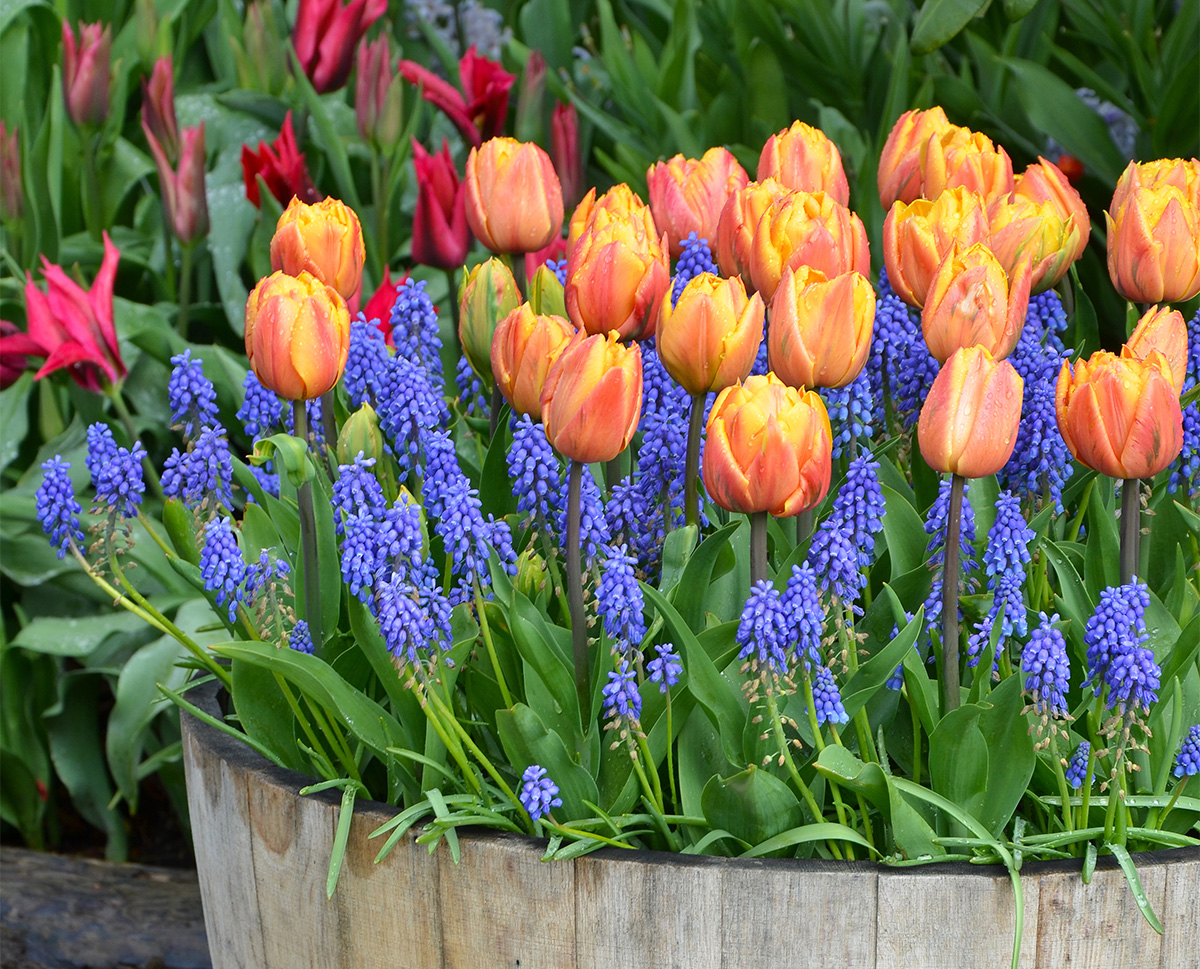
Few gardening moments are as satisfying as watching a pot or border burst into life after months of looking quietly unremarkable. Lasagne bulb planting is one of those rare techniques that rewards a little planning with weeks — sometimes months — of continuous colour. By layering bulbs in pots that flower at different times, you can create a living display that unfolds in stages, from the first brave blooms of late winter right through to late spring, sometimes early summer.
If you’re unfamiliar with the technique of lasagne planting, then check out our Step by Step Guide to Lasagne Bulb Planting.
Now you know how to lasagne plant, the next question is the fun one: which bulbs should you actually use, and when should they go in?
Not all bulbs are suited to sharing space, and choosing the right combinations is what turns a good display into a show-stopping one.
In this guide, we’ll explore the best bulbs for lasagne planting, how to layer them for maximum impact, and the ideal planting times for each. With the right choices, you can transform a single container or patch of soil into a season-long celebration of colour and scent.
Picking Your Plants
Planting bulbs in layers works because different bulbs naturally grow and flower at different speeds and heights. By layering them in the order they bloom — late spring bulbs at the bottom, mid-spring in the middle, and early spring at the top — you create a succession of flowers that emerge one after another, all from the same pot or planting area.
The best bulbs for lasagne planting share a few key characteristics: they’re hardy, happy growing close together, and have strong shoots capable of pushing up through the soil without disturbing the layers above. Choosing bulbs with staggered flowering times and varying stem heights ensures that each layer gets its moment in the spotlight.
Bottom Layer: Late Spring Flowers
Tulips and Alliums are perfect choices for the first, bottom layer.
This layer should be made up of bulbs that flower last and produce taller stems, allowing them to grow up through the soil and earlier-flowering bulbs above without competing for space or light. Late-season Tulips — such as Triumph, Parrot and Lily-flowering varieties — are particularly well suited, as they have strong stems and reliable late spring flowering.
Alliums are another excellent option. Their upright growth habit and architectural flower heads make them ideal for emerging above other plants later in the season. Most Alliums bloom from May through to early June, while Drumstick Alliums can continue flowering into July and even August, extending the display long after other bulbs have faded.


Leave a Reply