
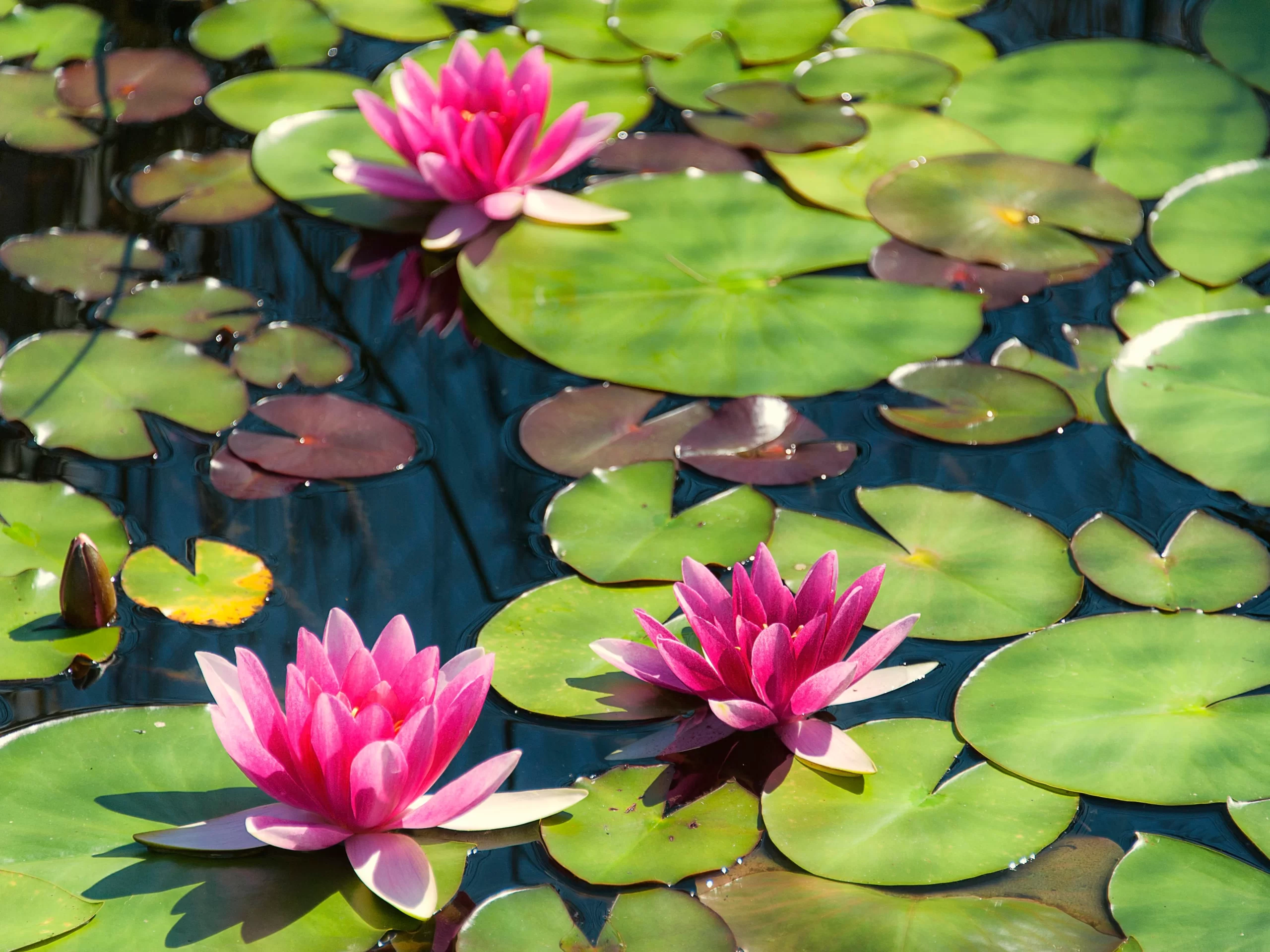
Whether you’re nurturing a small wildlife pond or managing a larger natural pond, the right plants do far more than add beauty. They keep the water clean, support wildlife, and create a balanced habitat that’s easier to maintain. Whether you’re just getting into pond care or you’ve had a water garden for years, adding the right plants can make a huge difference. Before you look past the greenery and focus on filters or fountains, take a moment to discover how pond plants can transform your water feature into a healthier, more vibrant environment.
Having plants in a pond provides several benefits:
Water quality and filtration
Filter nutrients:
Aquatic plants act like natural water filters. As they grow, they soak up excess nutrients such as nitrogen, ammonia, and phosphates that would otherwise feed algae. When these nutrients are kept in check, your pond stays healthier and easier to maintain. Instead of relying solely on mechanical filters, you get a built-in, eco-friendly cleaning system in the water.
Control algae:
Algae thrives on sunlight and extra nutrients, and pond plants help reduce both. By absorbing the nutrients algae need and casting shade across the water, plants make it much harder for algae to take over. This means fewer green blooms, clearer water, and a pond that looks more like an oasis and less like a swamp.
Tip: If you’re battling algae before you’re ready to place plants in the water and you want to clear your water first, try using Algae Klear Xtra, a highly effective pond algae treatment that eliminates algae and blanket weed within 2-3 weeks. Ideal for treating algae submerged below the water’s surface, typically on pond walls, pumps, and plants, Algae Klear Xtra is the go-to solution for managing stubborn algae.
If you’re dealing with algae floating on the water’s surface, you’ll need Blanketweed Klear, a powerful and fast-acting treatment designed to tackle floating blanket weed in your pond. Using oxygen to instantly kill the weed, Blanketweed Klear eliminates it within 24 hours, restoring the clarity and beauty of your pond.
If you’re not sure which type of algae you have and want to clear it before placing your pond plants, check out our Ultimate Guide to Blanket Weed for more information.
Produce oxygen:
Through photosynthesis, many pond plants – especially submerged species – release oxygen directly into the water. This oxygen is essential for fish, snails, and other pond life. It also supports beneficial bacteria that help break down organic waste. Plants help keep the entire ecosystem breathing and balanced.
Wildlife habitat
Provide cover:
Pond plants create safe hideaways for all kinds of aquatic creatures. Submerged plants such as hornwort or anacharis, form underwater “forests” where small fish, fry, and larvae can duck out of sight from hungry predators. Taller, emergent plants, such as cattails or reeds, offer structure above the waterline, giving insects and larvae a place to climb up, moult, or escape the water as they transition to their adult forms. These plants turn your pond into a multi-level shelter for wildlife.
Leave a Reply